Transport Services for Elderly People in New Zealand
A plain-language guide to the transport options available for older New Zealanders, from community volunteer drivers through to accessible vehicle hire and medical appointment transport.
Why transport is a bigger issue than it seems
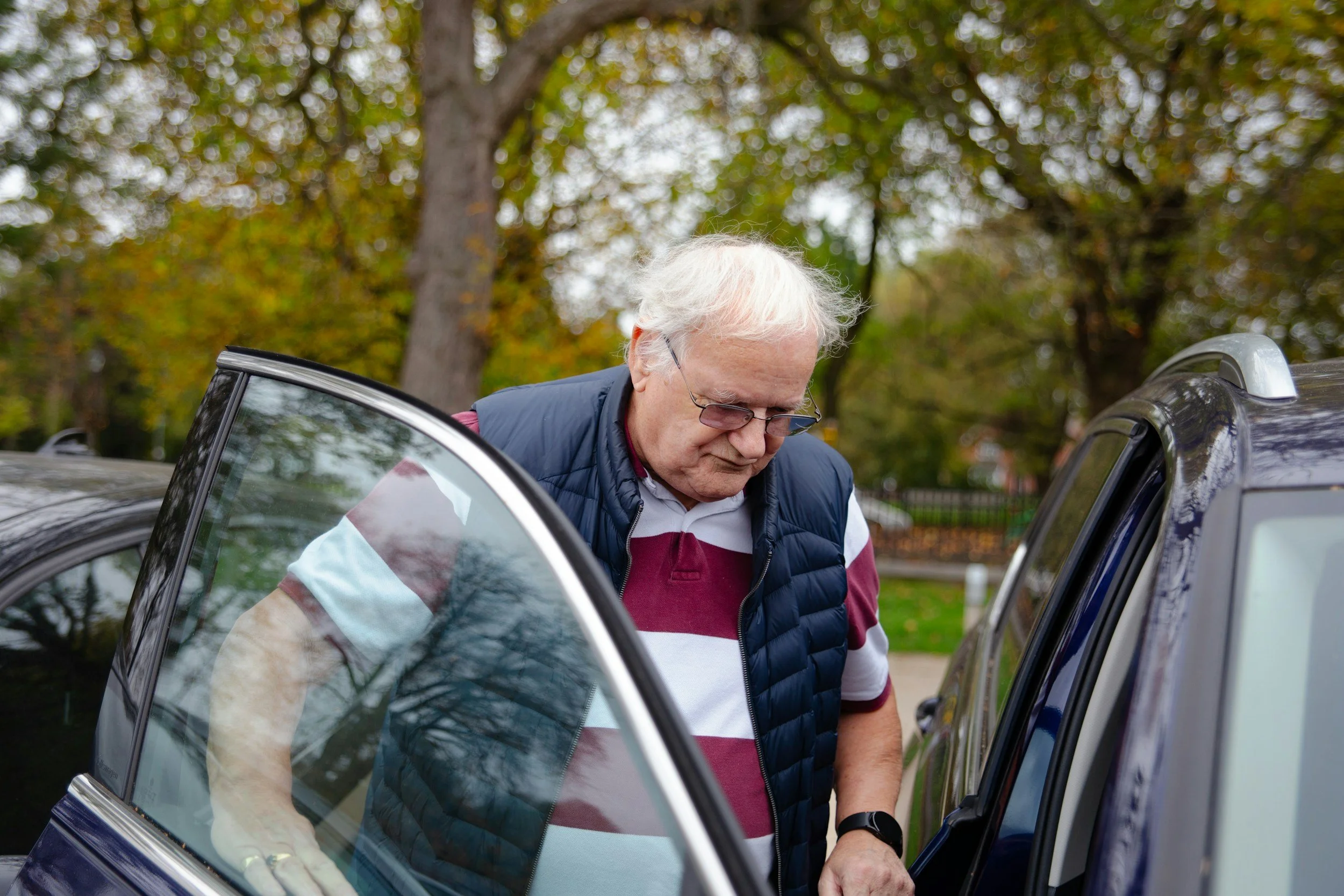
For many older people, losing the ability to drive is one of the most significant changes in their independence and social life. New Zealand's spread-out geography and the reality that many essential services are not walking distance from where people live, makes a lack of transport a genuine barrier to health care, social connection, and daily life.
Families often underestimate the impact. When a parent can no longer drive, every appointment, social outing, and grocery run becomes something that needs to be organised. Without a transport solution, isolation follows quickly.
WORTH KNOWING
Addressing transport early, before driving stops, makes the transition significantly easier. Helping a parent establish transport habits and relationships with drivers while they are still capable of driving means the transition is far less abrupt when it happens.
The Total Mobility Scheme
The Total Mobility Scheme is a subsidised transport scheme for people who have an impairment that prevents them from using public transport safely or independently, including many older people with mobility, vision, or cognitive difficulties. It's run by regional councils and the exact amount differs by regions but it typically covers around half the fare up to a set maximum per trip, used with participating taxi, shuttle, and companion driving operators, including Driving Miss Daisy.
How to access it: you'll need an assessment to confirm eligibility. This is usually arranged through your regional council, though your GP or an occupational therapist can sometimes help start the process. Once approved, you'll be issued a Total Mobility card or swipe tag to use when booking trips with participating operators in your region.
Coverage, subsidy amounts, and participating operators vary by region — check with your regional council for the specific details that apply where your parent lives.
Transport Services Providers



Other types of transport support in New Zealand
Age Concern
Age Concern operates through regional offices across New Zealand, and transport support varies depending on the branch. Some regions run their own volunteer driver schemes for appointments and errands, while others provide information and referrals to other local transport services, including the Total Mobility Scheme.
Because services differ by area, the best approach is to contact your nearest Age Concern office directly to ask what transport support is currently available in your region.
Phone: 0800 65 2 105 (national, will direct to regional office)
Website: ageconcern.org.nz
The St John Health Shuttle
The St John Health Shuttle provides free transport for people who need help getting to medical appointments and can't drive or use other transport options. It's commonly used by older people, those recovering from illness, and people with mobility limitations.
Availability isn't universal — coverage depends on whether a Health Shuttle operates in your specific area. Check with your local St John branch to confirm what's available and how to book.
Contact your local St John branch via stjohn.org.nz
Community transport
SuperGold Card holders are entitled to free off-peak travel on public transport in most parts of New Zealand. The main exceptions are Auckland, Otago, and Southland, where a discount applies instead of free travel — in Auckland this works through a gold AT HOP card, available from ticket offices for $10 with a minimum $5 credit, using the SuperGold Card and photo ID to register. Exact off-peak hours vary by region, so check with your local public transport provider.
Medical transport — non-urgent
Health New Zealand provides non-urgent transport assistance for people who cannot get to medical appointments by other means. Eligibility criteria apply. Your parent's GP or specialist can advise on whether this is an option.
Local and regional transport schemes
Beyond the national services listed above, many regions have smaller, locally-run transport options — health shuttles, volunteer driver schemes, and community vans — that take people to medical appointments, shopping, and social activities. These are often free or low-cost, frequently run by volunteers, and vary significantly from area to area.
Because these services are so local and can change over time, the best way to find out what's available is to contact your regional council, a local community centre, or your nearest Age Concern office. Some regional councils, including Northland Regional Council, maintain an up-to-date list of community transport providers in their area.
If your parent is being discharged from hospital, ask the hospital directly about transport assistance — many hospitals run their own shuttle services or can point you to local options.
Taxi and rideshare services
Standard taxi and rideshare services (Uber, etc.) are available in main centres and increasingly in larger towns. These provide flexible on-demand transport but require smartphone capability to book. Some older people find this straightforward; others need family assistance with booking.
Private transport with a support worker
Home care and support services often include transport to appointments and social activities as part of their offering. If your parent already has a support worker, this may be the most practical option for regular transport needs.
Accessible transport options
For people with significant mobility limitations such as wheelchairs, walkers, or difficulty with standard vehicle access, accessible transport options are more limited. New Zealand does have some accessible vehicle options through community transport schemes and specialist providers. These require advance booking and are in demand. Planning ahead is important.
When driving should stop
The question of when an elderly parent should stop driving is one of the most difficult conversations families face. We cover this in detail in our guide: Driving and dementia — when to have the conversation about car keys. The short version: the earlier the conversation starts, the better the outcome for everyone.